
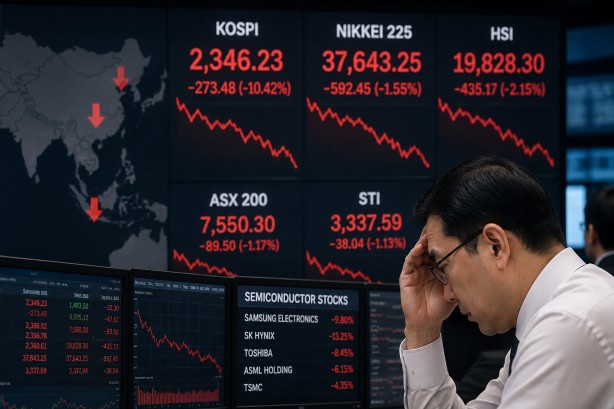
Asian stock markets experienced a downturn on Tuesday, primarily driven by a significant sell-off in South Korea. The Kospi index saw a steep decline, falling over 10% as semiconductor stocks faced substantial losses. This notable drop was largely influenced by investor apprehension regarding the intensifying competition from Chinese AI startups and chipmakers, which could potentially hinder the expansion of the global artificial intelligence sector.
In particular, shares of major South Korean companies Samsung Electronics and SK Hynix plummeted approximately 12%. The mounting fears over China’s growing influence in the semiconductor industry have sparked concerns among investors about the future profitability and growth prospects of these tech giants. This sentiment has significantly impacted market confidence in South Korea, contributing to the broader regional downturn.
The negative trend was not confined to South Korea alone. Other major Asian markets also closed the day in the red. Japan’s Nikkei, Taiwan’s Taiex, Hong Kong’s Hang Seng, and China’s Shanghai Composite all registered losses, reflecting a widespread cautious sentiment among investors in the region.
Australia’s S&P/ASX 200 was an exception amidst the regional declines, managing to post gains. The resilience of the Australian market provided a glimmer of optimism in an otherwise challenging day for Asian stocks.
Simultaneously, global oil prices experienced a decline due to easing tensions between the United States and Iran. This development has sparked hopes for renewed diplomatic negotiations between the two nations, alleviating some concerns over potential disruptions in global energy supply. The prospect of improved dialogue has positively influenced market perceptions, contributing to the reduction in oil prices.