
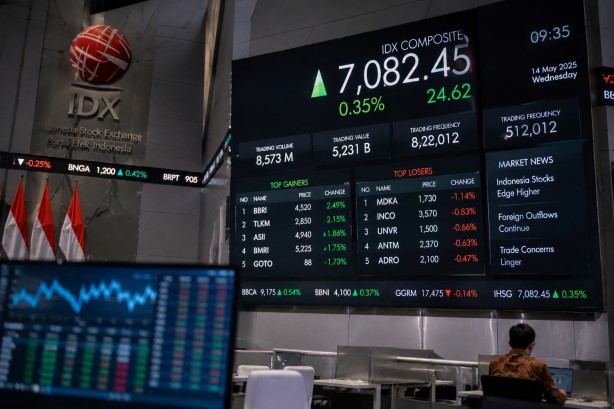
Indonesia’s stock market showed resilience in the week ending July 24, as the Jakarta Composite Index (JCI) experienced a modest increase of 0.34%. This rise occurred despite ongoing foreign investor withdrawals and an atmosphere of global economic uncertainty. The Indonesia Stock Exchange saw its market capitalization climb to Rp 10,870 trillion, bolstered by a 41% surge in average daily trading turnover, which reached Rp 19.76 trillion.
However, the enthusiasm in local trading activity was tempered by the continued net selling by foreign investors, who have withdrawn Rp 79.09 trillion from Indonesian assets this year. This trend reflects a cautious stance towards the country’s markets amid broader economic concerns. Contributing to the cautious sentiment were rising global oil prices, spurred by escalating tensions in the Middle East, and the imposition of new US tariffs on imports from various countries, including a 10% tariff on certain goods from Indonesia.
The fluctuations in oil prices have prompted Indonesia’s Finance Ministry to acknowledge potential impacts on the 2026 state budget. Despite these challenges, the ministry maintains that the country’s fiscal position remains stable, highlighting Indonesia’s resilience in navigating global economic pressures.
Overall, while the local stock market has shown signs of strength with increased trading turnover and a rise in market capitalization, the persistent foreign investor outflows underscore the need for cautious optimism. The interplay of geopolitical tensions and trade policies continues to shape investor sentiment and market dynamics in Indonesia.