
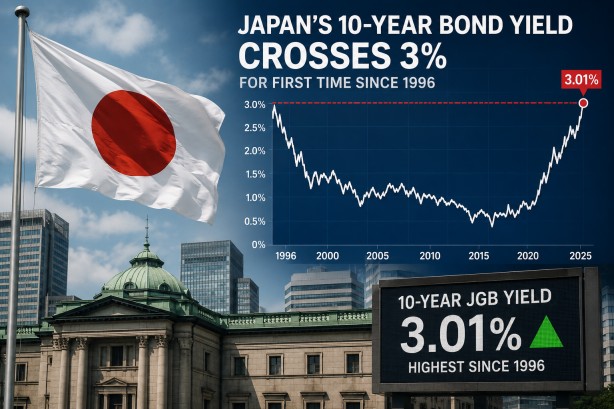
Japan’s benchmark 10-year government bond yield has surpassed 3% for the first time since 1996, signifying a pivotal change in the nation’s bond market landscape. This rise in yields enhances the attractiveness of domestic fixed-income investments, prompting some Japanese investors to reassess their overseas bond portfolios. So far, Japanese investors have withdrawn a net ¥3 trillion ($18.7 billion) from foreign debt markets this year, up until August 22, as per official statistics.
The increased yields on Japanese bonds are making them more competitive, especially as the costs associated with currency hedging diminish the returns from international investments. A recent survey of 82 Japanese corporate pension funds revealed the strongest inclination to boost domestic bond holdings since the survey’s inception in 2008. This shift in investment preference holds significant implications for global financial markets, given that Japanese investors have traditionally been substantial purchasers of U.S. Treasuries and other sovereign debts.
Should Japanese investors continue to reduce their overseas bond purchases, it could exert upward pressure on global bond yields and borrowing costs. The rise in domestic yields is largely attributed to concerns over inflation, anticipated Bank of Japan interest rate hikes, and increasing apprehensions about Japan’s fiscal health. Despite these factors, analysts suggest that this trend is more indicative of a gradual reallocation toward domestic assets rather than an abrupt, large-scale withdrawal from international markets.
The evolving dynamics within Japan’s bond market underscore the broader global economic shifts, as investors navigate the complexities of inflationary pressures and fiscal strategies. As Japanese investors recalibrate their portfolios, the ripple effects may be felt across international financial markets, potentially altering the landscape for sovereign debt investments worldwide. This ongoing transition highlights the interconnected nature of today’s global economy and the pivotal role that Japanese financial activity plays within it.