
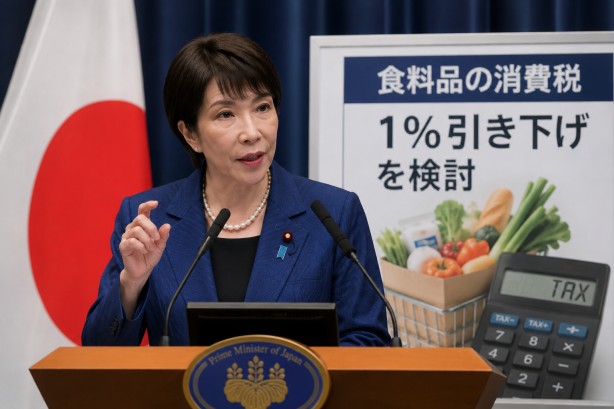
In a significant move, Japanese Prime Minister Sanae Takaichi is set to direct the ruling Liberal Democratic Party to advance a proposal aimed at slashing the consumption tax on food items from the current rate of 8% down to 1%. This reduction is slated to be in effect for two years, beginning in April 2027. The initiative comes as a response to stalled cross-party discussions on tax reforms, with the government and its coalition partners supporting the temporary tax cut as part of broader efforts to provide financial relief.
The proposed tax reduction is part of a larger plan that includes approximately ¥600 billion in financial aid targeted at alleviating the cost-of-living pressures on low- and middle-income households. This approach underscores the government’s commitment to easing the financial burden on citizens amidst ongoing economic challenges.
Efforts are underway to finalize the policy by early August, with the government keen to have the necessary legislation ready for introduction during an extraordinary parliamentary session later this year. This timeline is intended to ensure that the tax reduction measures are in place by the following April.
The decision to cut the consumption tax comes after prolonged discussions failed to bridge differences between various political parties on how best to approach tax reform. The proposed measures reflect a strategic move by the government to provide timely economic support to its citizens, reinforcing its dedication to addressing pressing financial concerns.