
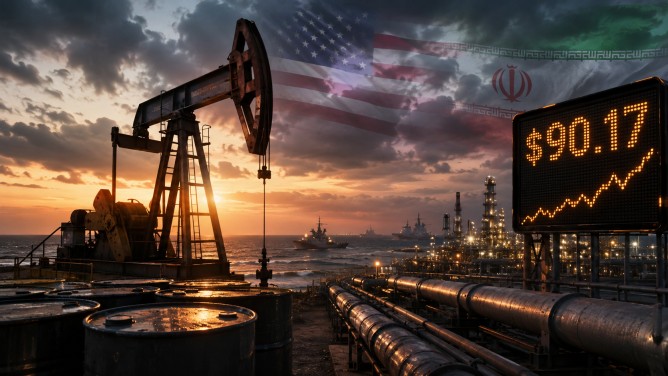
Oil prices have surged significantly as geopolitical tensions intensify following the expiration of a negotiation period between the United States and Iran without reaching a peace deal. Brent crude has risen above $90 per barrel, peaking at around $91.63, marking the highest level since late July. The escalation comes amid warnings from US President Donald Trump, who has demanded Iran’s surrender and cautioned that the conflict may worsen if diplomatic efforts falter.
The Strait of Hormuz, a vital artery for global oil shipments, has become a focal point of concern. A notable decrease in commercial vessel traffic through this strategic waterway has sparked fears of sustained disruptions in oil supplies. The situation has been exacerbated by reports of an attack on a cargo ship navigating the strait, raising alarms about the security of maritime operations in the region.
Iran has signaled the possibility of adopting a more assertive military posture should negotiations fail, adding further uncertainty to an already volatile situation. The ongoing tensions have prompted investors to brace for a potentially extended disruption in oil supplies. Any prolonged closure or reduction in traffic through the Strait of Hormuz could exert additional upward pressure on crude oil prices, impacting global markets.
Analysts are raising alarms about the broader implications of continued conflict in the Middle East, particularly when considered alongside the ongoing war in Ukraine. This combination of geopolitical uncertainties could lead to further shocks in global energy markets, potentially driving oil and gas prices even higher.