
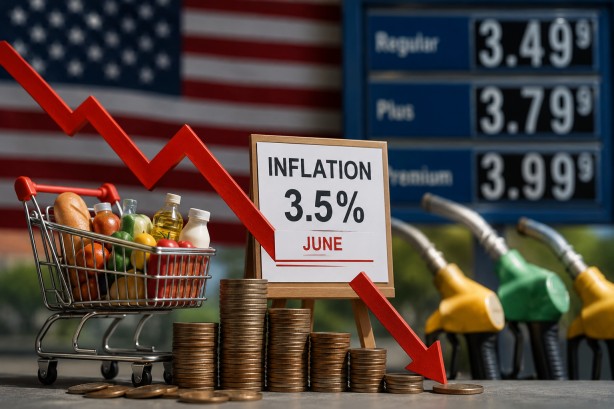
The United States experienced a slowdown in annual inflation to 3.5% in June, largely driven by a temporary decrease in energy prices that helped lower the overall costs for consumers. According to recent Consumer Price Index (CPI) figures, this marks a change from the higher inflation rates observed in prior months. A notable 0.8% drop in prices compared to May was primarily attributed to reduced gasoline and fuel costs, which managed to counterbalance rising expenses in areas such as food, housing, and utilities.
Core inflation, which is a metric that excludes the often-volatile food and energy sectors, dipped to 2.6% on an annual scale. This measure is closely watched by the Federal Reserve as it provides a clearer picture of underlying inflation trends. Despite the current reprieve from inflationary pressures, there are concerns this may be short-lived, as escalating tensions in the Middle East have begun to drive global oil prices upward once more.
The impact of rising crude oil prices is already being felt, with consumers facing higher fuel costs and industries like aviation and transportation grappling with increased operating expenses. These developments could potentially reverse the recent gains in inflation reduction. The current situation underscores the volatility of energy markets and their significant influence on consumer prices.
As the Federal Reserve prepares for its upcoming policy meeting later this month, it will likely weigh this latest inflation data alongside labor market conditions. Although there has been some moderation in inflation rates, the numbers remain above the central bank’s long-term goal of maintaining a 2% inflation rate. This leaves room for speculation about when the Fed might consider adjusting interest rates in response to these economic indicators.