
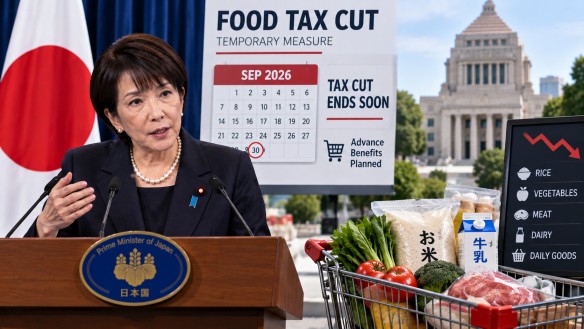
In a strategic move to cushion the impact of a future tax increase, Japan’s government is planning to offer advance cash benefits to low- and middle-income households. This initiative is set to coincide with the expiration of a temporary consumption tax reduction on food items in 2029. Currently, the government is proposing a significant tax reduction from 8% to 1% over a two-year period starting in April 2027. The benefit program aims to ease the transition when the tax rate returns to 8% in April 2029, by providing half of the annual benefit to eligible households in advance.
Scheduled for implementation in April 2027, the income-based program will tailor payments according to household income levels and the number of children. The government’s projections estimate annual disbursements of approximately ¥600 billion, or $4 billion, during fiscal years 2027 and 2028. This policy is poised for finalization in September, with related legislation expected to be tabled in an extraordinary parliamentary session anticipated in October.
To fund the tax reduction, the government intends to scrutinize current subsidies, special tax measures, and overall government spending as potential resources, rather than relying on deficit-financing bonds. However, the precise sources of funding are still under deliberation. This approach reflects a commitment to responsible fiscal management while addressing the needs of the population.
Additionally, the government is preparing to support sectors likely to be affected by these tax changes. Specific measures are being planned to assist agriculture, forestry, fisheries, and restaurant industries, ensuring that these vital sectors can adapt smoothly to the new tax landscape. Retailers will also benefit from extended deadlines for adjusting to tax-inclusive price display requirements, allowing them more time to comply with the updated regulations.