
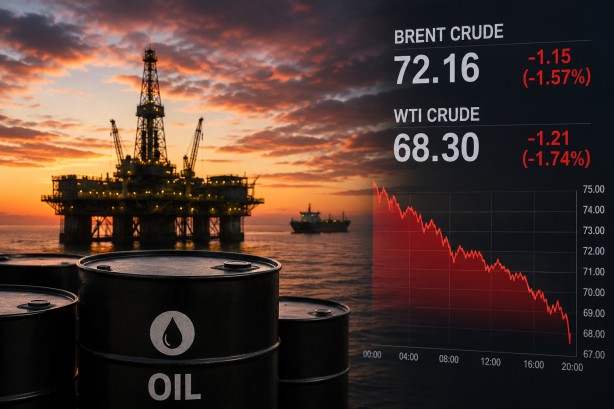
Oil prices saw a slight dip on Thursday as investors took profits amid ongoing geopolitical tensions between the United States and Iran. Brent crude experienced a 0.52% decline, settling at $84.51 per barrel, while US West Texas Intermediate crude dropped by 0.29% to reach $79.37 per barrel. Despite these decreases, both benchmarks hovered near their highest levels in a month, having earlier extended their recent upward trajectory.
The market remains sensitive to the risk of supply disruptions following a fresh series of US military strikes targeting Iranian locations, coupled with Tehran’s threats to curtail regional energy exports. The strategic Strait of Hormuz, a vital conduit for a substantial portion of the world’s oil and liquefied natural gas transport, has become a focal point for market participants. Reports indicate a reduction in shipping activity through this critical channel in light of the latest flare-up in hostilities.
Geopolitical tensions have continued to exert upward pressure on oil prices, though investors are vigilant about the potential for significant supply interruptions. Analysts emphasize that the ongoing conflict could further elevate prices if conditions worsen, whereas a potential de-escalation might ease them as the year progresses.
Furthermore, there are rising concerns regarding the security of the Bab el-Mandeb Strait, another crucial energy passage. Observers worry that regional allies might become embroiled in the conflict, which could exacerbate the situation and impact global energy flows.
While the current situation sustains elevated prices, the oil market remains on edge, closely watching for any shifts in the geopolitical landscape that could either intensify or alleviate the current crisis, thereby influencing future price movements.