
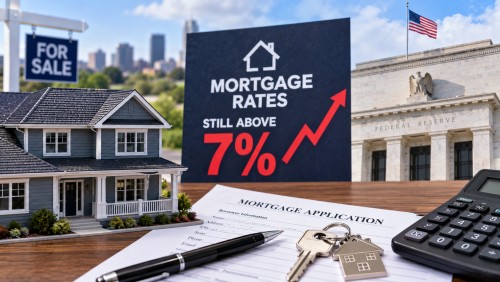
U.S. mortgage rates are holding steady above 7% as a result of the Federal Reserve’s latest interest-rate hike, compounding borrowing expenses for homebuyers across the nation. With the Fed raising its target interest-rate range to 3.75%–4% due to persistent inflation, the average 30-year mortgage rate reached 7.37% as of September 17, 2026. Meanwhile, the 15-year mortgage rate averaged 6.62%.
Despite the Fed’s policy changes, mortgage rates do not align directly with these adjustments. They are influenced by a combination of financial market dynamics, investor demand, and inflation expectations, meaning the recent Fed increase doesn’t automatically lead to a proportional rise in mortgage rates.
For prospective homebuyers, the increase from March’s 30-year mortgage rate of 5.75% to the current rate significantly raises monthly payment obligations. However, borrowers could secure rates below these averages based on factors such as their credit score, down payment size, and lender terms. Options like paying mortgage points upfront or considering adjustable-rate mortgages could potentially lower initial costs, though they carry their own risks and costs.
Refinancing opportunities have also become more expensive, with the average 30-year refinance rate at 7.41% and the 15-year rate at 6.75%. This makes refinancing less appealing for homeowners who already have mortgages at lower rates unless the savings from refinancing surpass the associated expenses.
Looking ahead, the trajectory of mortgage rates will largely depend on inflation trends, broader economic conditions, financial market responses, and expectations regarding future Federal Reserve actions. While rates may fluctuate, there is no certainty that delaying a mortgage decision will result in lower borrowing costs.